Research Digest
|
Psychology
Bugs at the Buffet: Do We Stare at What Disgusts Us?
Food Science
Psychology & Behavior
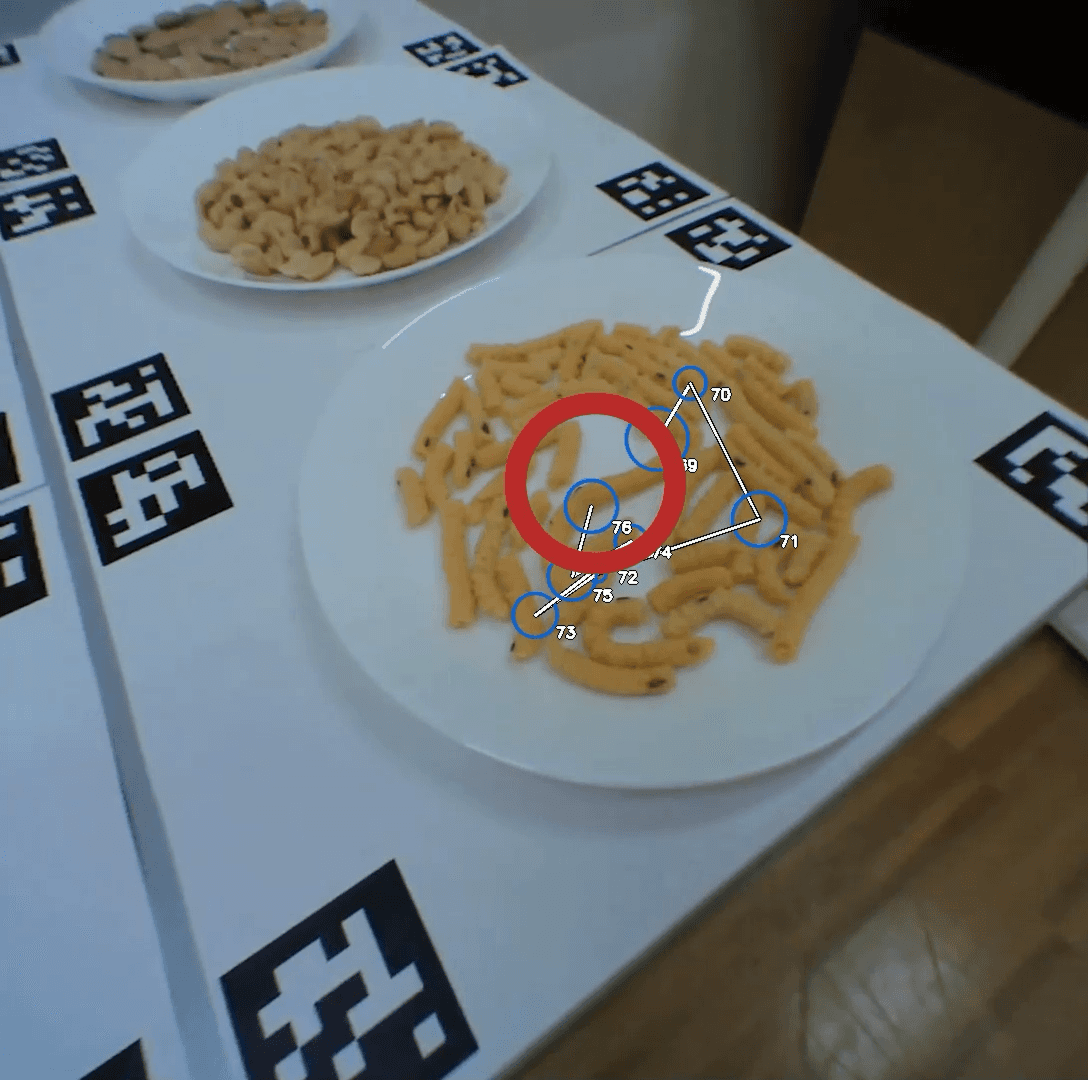
Video still from below: A participant observing a buffet containing insect-based snacks, familiar foods, novel foods, and non-food items. Video available at: https://osf.io/t4azu/files/ckvg3
When Sustainability Meets Disgust
Insects are increasingly promoted as a sustainable, protein-rich alternative to conventional meat. Despite their environmental and nutritional benefits, acceptance among consumers in Western societies remains low. A major obstacle is food-related disgust, often described as a “yuck” response, which can strongly influence food choices and override rational considerations.
From a psychological perspective, disgust is thought to function as a behavioral immune system, encouraging avoidance of stimuli that may pose a health risk. In visual terms, this often manifests as oculomotor avoidance, where people avert their gaze from unpleasant or threatening objects. Whether this mechanism applies in the context of food, particularly novel foods, has remained unclear.
Studying Visual Attention in a Realistic Food Context
To examine how disgust and curiosity shape food selection, Jonas Potthoff and colleagues from the University of Graz, the University of Bristol, and the University of Bath conducted an eye tracking study in a realistic buffet setting. Using Pupil Invisible eye tracking glasses and the Marker Mapper enrichment available in Pupil Cloud, the researchers recorded gaze behavior of 37 participants as they explored a display of food items.
Participants viewed a buffet of 12 items for four minutes while considering what they might want to eat. The selection included insect-based snacks such as dried mealworms and crickets, novel but non-insect foods like roasted broad beans, familiar snacks such as crisps and peanuts, and visually similar non-food objects like wooden buttons. This design allowed the researchers to isolate the effects of disgust, novelty, and food relevance on visual attention.
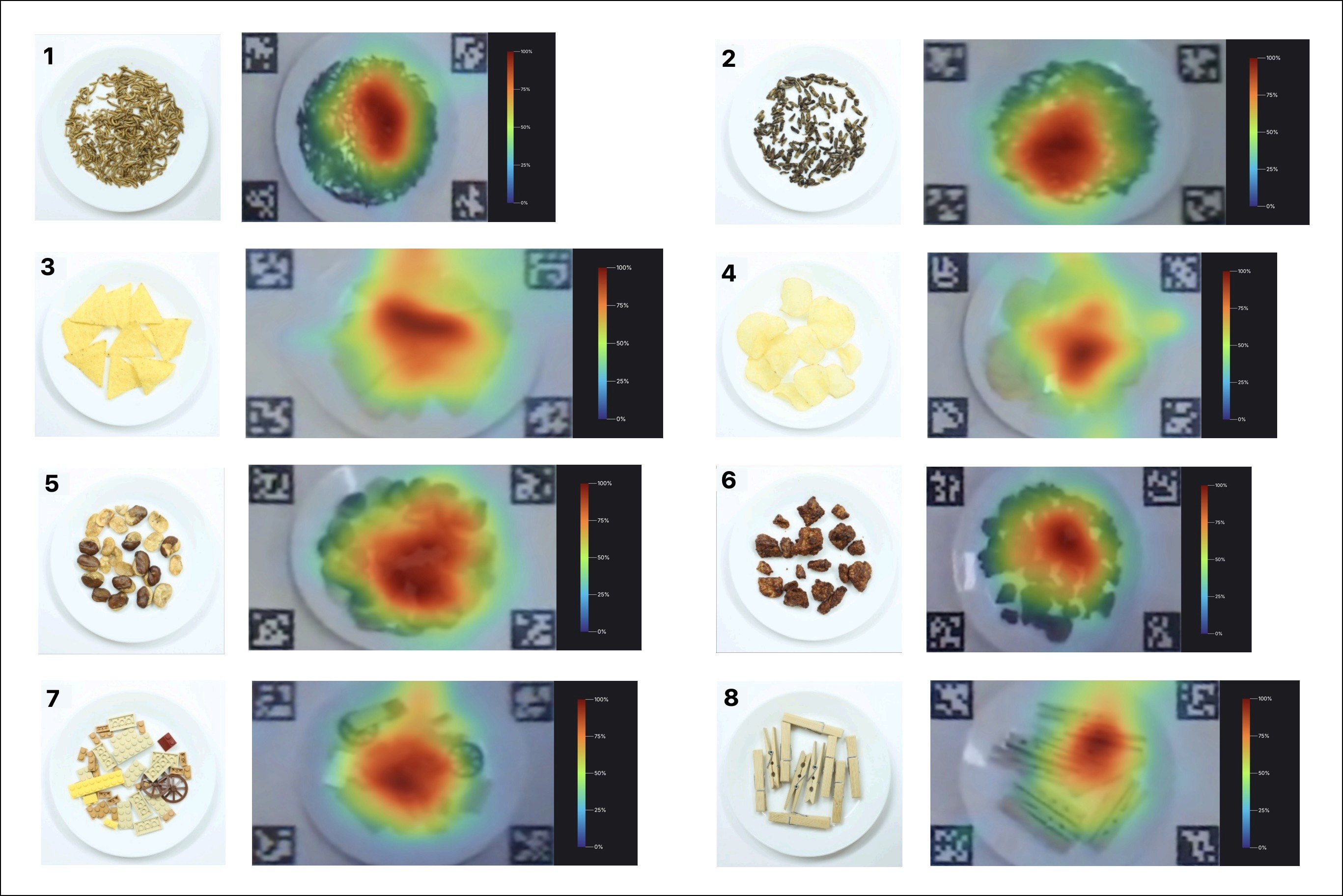
Figure 1: Fixation heatmaps showing visual attention to different items displayed on the buffet: (1) mealworms, (2) crickets, (3) tortilla chips, (4) crisps, (5) roasted broad beans, (6) Wah-Yuen fried dough, (7) Lego bricks, and (8) cloth pegs. Image adapted from Potthoff, J., Gumussoy, M., Schienle, A., & Dalmaijer, E. S. (2025). Curious yet disgusted: A mobile eye-tracking investigation of visual attention to insect-based snacks in a buffet setting. Food Quality and Preference, 105826 and additional materials provided by the authors.
Disgust Does Not Lead to Looking Away
Participants rated insect-based foods as significantly more disgusting and reported a lower willingness to eat them compared to familiar or novel non-insect foods. Based on existing theories of disgust, this would predict reduced visual attention.
However, eye tracking data revealed a different pattern. Participants spent more time looking at insect-based foods and other novel items than at familiar snacks or non-food objects. Rather than avoiding these items visually, participants engaged in prolonged and exploratory viewing.
This dissociation suggests that food-related disgust operates differently from other forms of disgust. While insect foods elicited negative evaluations, they did not trigger the visual avoidance typically observed for stimuli associated with immediate threat or contamination. Instead, novelty appeared to drive visual exploration, even in the presence of strong disgust.
Implications for Food Acceptance
These findings challenge the assumption that disgust automatically leads to the disengagement of visual attention. In the context of food choice, highly disliked items may still attract sustained attention if they are novel.
For food developers and sustainability advocates, the results suggest that visibility is not the primary barrier to acceptance of insect-based foods. Such products already capture attention naturally. The key challenge lies in reducing the emotional response of disgust and translating visual curiosity into willingness to taste and consume.
Understanding how people visually engage with novel and aversive foods may help inform more effective strategies for introducing sustainable alternatives into everyday diets.
Further Resources
Full article: https://www.sciencedirect.com/science/article/pii/S095032932500401X
OSF Project: https://osf.io/t4azu/
Research Centers
Department of Psychology, University of Graz, Graz, Austria
School of Psychological Science, University of Bristol, Bristol, UK
Department of Psychology, University of Bath, Bath, UK