Research Digest
|
Psychology
How Children Learn from Everyday Life
Child Development
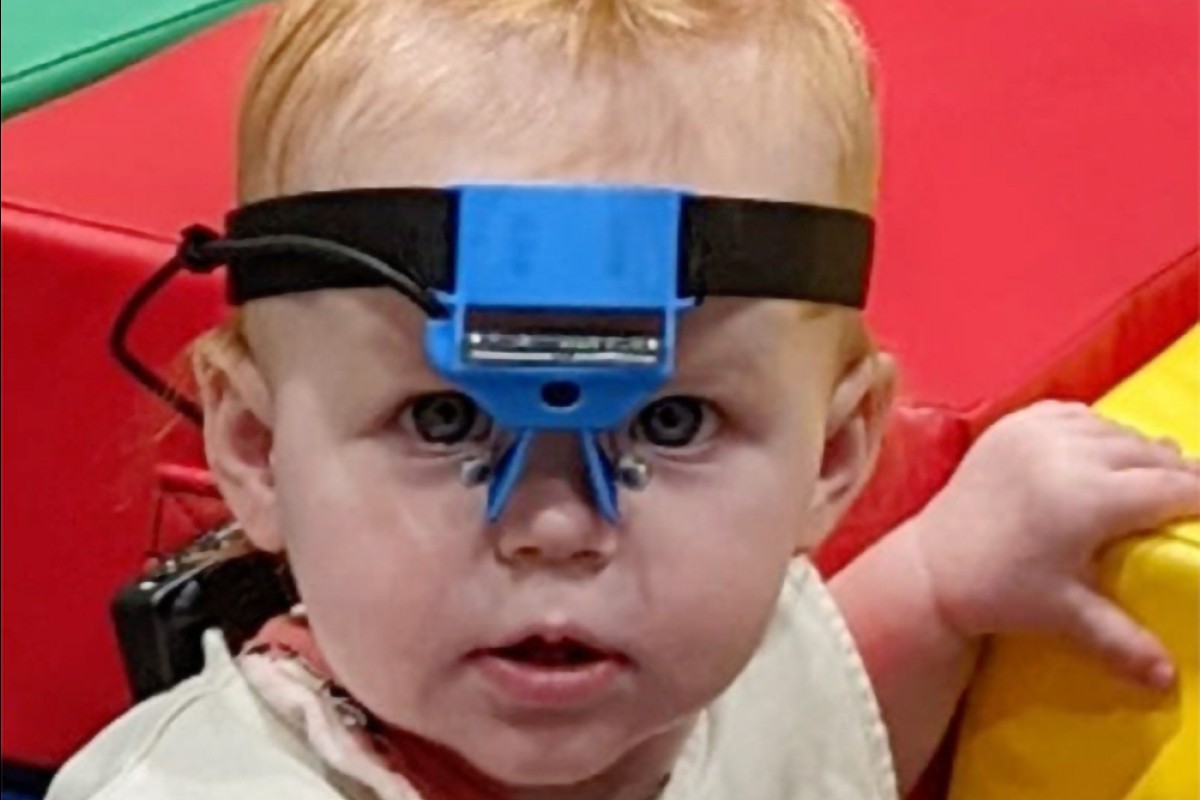
Seeing Behavior in the Real World
A child’s first years are all about watching our every move. Every shared glance, pointed finger, and everyday household chore acts as a building block for learning, culture, and connection.
Historically, studying these fast-paced interactions has been tough for researchers, who have mostly had to rely on the controlled and sometimes unnatural environment of the laboratory. In this digest, we explore three recent studies breaking free from those limits. By using wearable technology, researchers can finally capture the raw, unfiltered reality of parent-child interactions exactly as they happen.
Together, these findings challenge the old idea of infants as passive learners. Instead, they reveal babies as highly active, strategic explorers of their environment, proving that the most important cognitive leaps often happen in the most ordinary moments.
Learning from the Mundane: The Power of Non-Child-Directed Activity
Kaplan, B. E., Monroy, C., & Yu, C. (2026). Seizing Learning Opportunities in Everyday Life: Infants Are Attentive During Non‐Child‐Directed Activity. Developmental Science, 29(2), e70141.
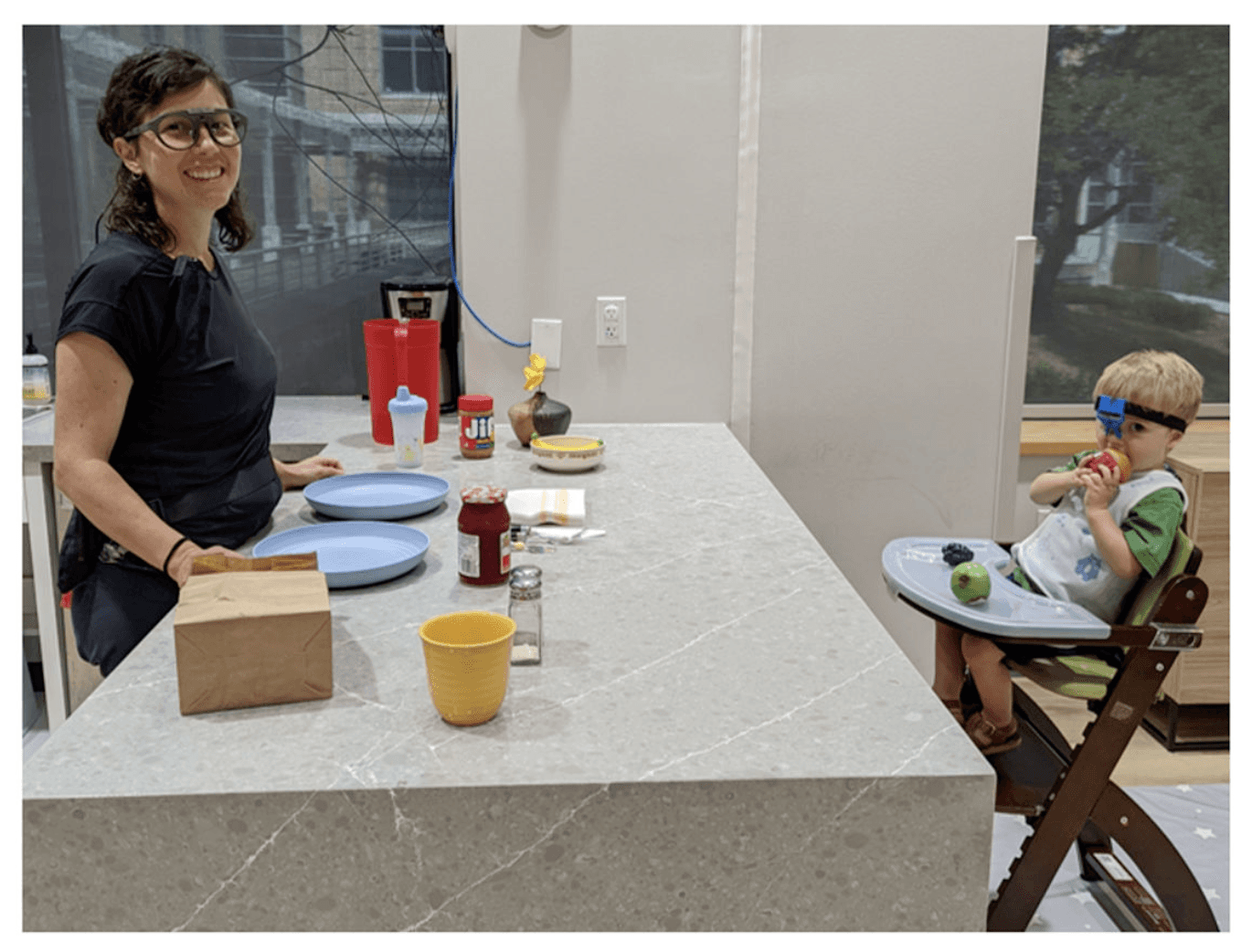
Figure 1: A parent and child wearing Neon eye tracking glasses in the HOME Lab, an apartment-like laboratory environment designed to support naturalistic research. Image adapted from Yu, C., Kaplan, B., Schroer, S., & Hayhoe, M. (2026). Examining micro-level natural behaviour to improve generalizability in behavioural science: a case study of parent–child joint attention. Philosophical Transactions of the Royal Society B: Biological Sciences, 381(1943).
Most research on infant learning focuses on child-directed activities, such as direct face-to-face play or book reading. However, parents spend a large portion of their day doing tasks for themselves or the family. Can infants learn from simply watching these everyday routines?
Using Neon, researchers Brianna E. Kaplan, Claire Monroy, and Chen Yu studied infants (aged 12 to 25 months) as they watched their parents prepare food in a home-like setting.
Despite being surrounded by visually salient distractors like colorful toys and room decor, infants showed sustained attention to their parents’ task. Three key patterns emerged:
Focus on meaningful actions: Infants spent more time watching actions that produced visible outcomes, such as scooping peanut butter or spreading jelly, compared to simple actions (like just moving an object).
Balancing their own exploration: Even while handling their own objects, infants continued to track what their parents were doing.
The engagement boost: When parents combined action with speech and eye contact, infant attention increased further.
This shows that daily household routines act as a rich source of "big data" for infants. Rather than just waiting for direct instructions, infants actively use these everyday moments to drive their own observational learning and cognitive development.
Redefining Joint Attention: Following Hands, Not Just Eyes
Yu, C., Kaplan, B., Schroer, S., & Hayhoe, M. (2026). Examining micro-level natural behaviour to improve generalizability in behavioural science: a case study of parent–child joint attention. Philosophical Transactions of the Royal Society B: Biological Sciences, 381(1943).
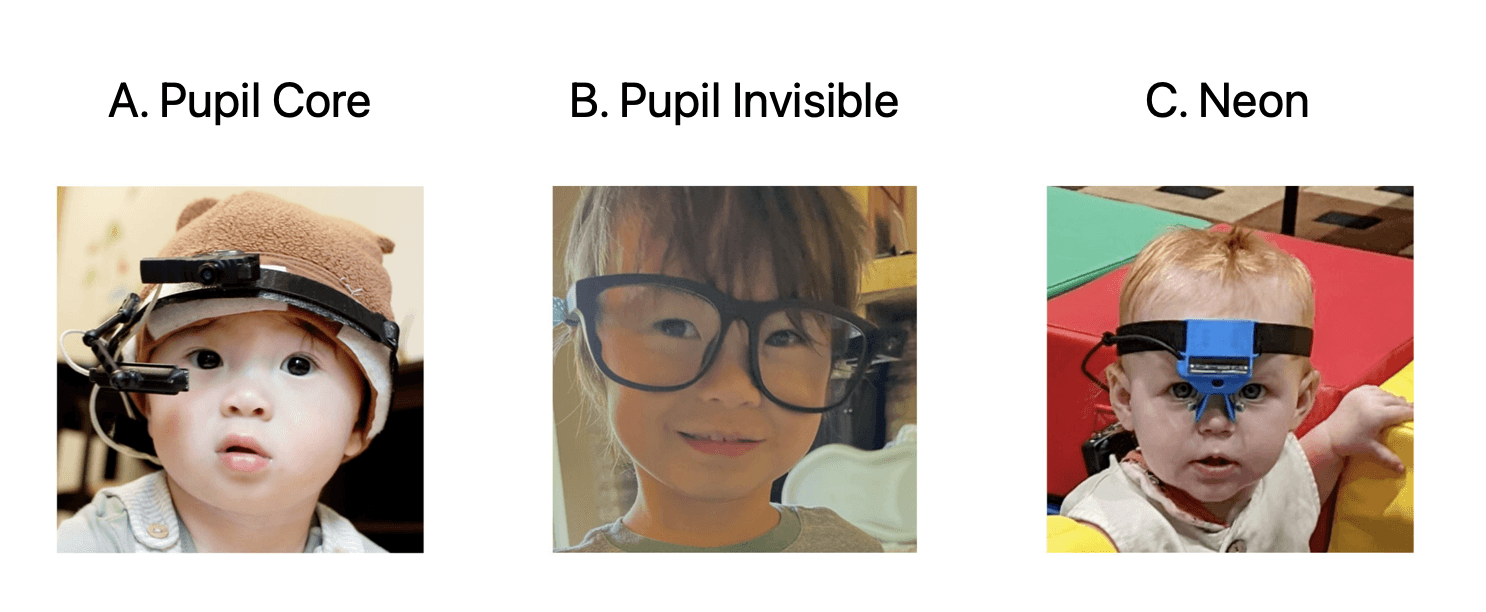
Figure 2. The three Pupil Labs eye tracking headsets used to collect data from children. Image adapted from Yu, C., Kaplan, B., Schroer, S., & Hayhoe, M. (2026). Examining micro-level natural behaviour to improve generalizability in behavioural science: a case study of parent–child joint attention. Philosophical Transactions of the Royal Society B: Biological Sciences, 381(1943).
If infants are active explorers, what exactly are they focusing on during play? Traditionally, researchers assumed that joint attention, i.e. when a parent and child share focus on the same object, relied heavily on mutual gaze and infants looking directly at their parents' faces.
However, analyzing large-scale gaze data collected from parent-infant free play with Neon, Pupil Invisible, and Pupil Core systems, researchers found a different pattern:
Infants rarely look at faces during play: Infants spent only a small portion of time looking at their parents’ faces.
The power of the hand: Instead of following gaze, infants tracked their parents’ hand movements to identify relevant objects.
Equal social partners: Both parents and infants actively initiated and followed joint attention, acting as equal participants.
By clearly defining and measuring these micro-level behaviors, the data shifts our understanding of early connection. Joint attention isn't just about making eye contact. Instead, it is a dynamic, hands-on collaboration where infants actively steer their own social interactions and act more like equal partners.
Cultural Nuances in Connection: Storytelling Across the Globe
Makazhu, I., Kapitany, R., Locke, A., & Monroy, C. (2026). Global Tales: Exploring Cultural Variances in Parent–Child Interactions Within Narrative Settings. Developmental Science, 29(2), e70136.
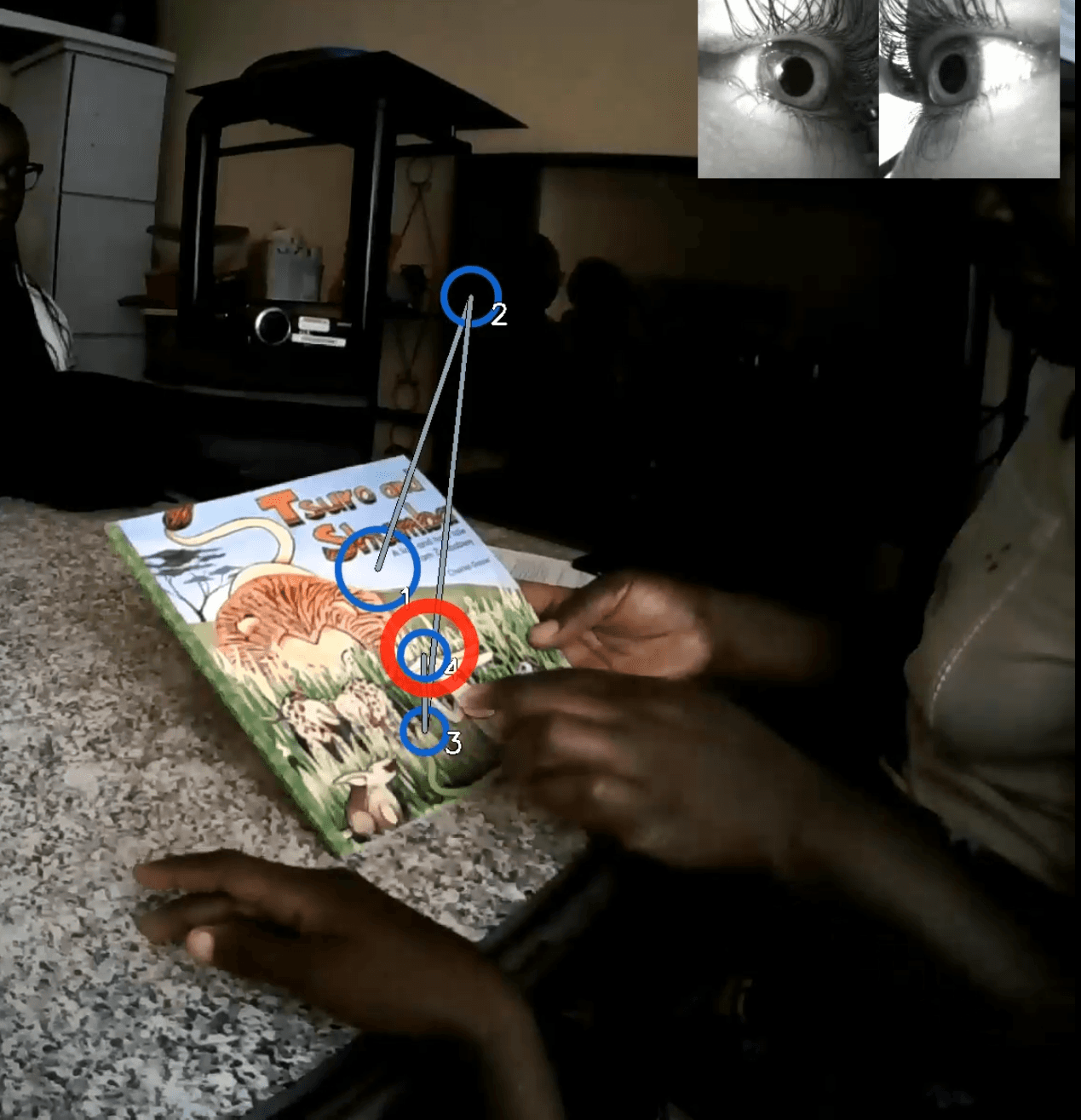
Figure 3: A child wearing Neon eye tracking glasses while their parent read them a book. Courtesy of Ingrid Makazhu.
While an infant’s drive to watch everyday chores and toy play seem universal, the way they focus that attention might be deeply shaped by their cultural context. Storytelling is a prime example. In a proposed study, researchers Ingrid Makazhu, Rohan Kapitany, Abigail Locke, and Claire Monroy will explore how cultural norms influence parent-child narratives in England and Zimbabwe.
Using Pupil Invisible glasses for parents and Neon for preschoolers, the team will conduct naturalistic home visits to compare oral narration (traditional storytelling without a book) against shared book reading.
Because oral storytelling in cultures like the Shona people of Zimbabwe is a highly dynamic, unscripted exchange, the researchers hypothesize it will elicit unique multimodal behaviors:
Greater mutual gaze: Oral narration allows storytellers to maintain face-to-face interaction, likely resulting in higher frequencies of mutual gaze compared to book reading, which anchors visual attention to the page.
Richer gesture use: Shona-speaking caregivers are expected to use significantly more co-speech hand gestures (like iconic or beat gestures) to enliven the narrative.
Enhanced recall: The interactive immediacy, eye contact, and gestures involved in oral storytelling are predicted to result in superior narrative recall for children, demonstrating that culturally rooted practices directly shape cognitive encoding.
A New View of Early Attention
Taken together, these studies offer a refreshing perspective on early development. Infants are not passive observers waiting for instruction. They take an active role in their own learning, actively sampling their environment, prioritizing meaningful actions while you make breakfast, following hands rather than faces during playtime, and adapting to the structure of social interaction.
For decades, these subtle strategies remained largely invisible to researchers. We are only now bringing them to light thanks to the shift toward naturalistic observation and wearable eye tracking. By capturing behavior exactly where it happens, this technology gives us a much clearer picture of human development, revealing the hidden, brilliant ways children connect with the world around them.
Further Resources
Examining micro-level natural behaviour to improve generalizability in behavioural science: a case study of parent–child joint attention
Full article: https://royalsocietypublishing.org/rstb/article/381/1943/20240377/480065/Examining-micro-level-natural-behaviour-to-improve
Research Centers:
Department of Psychology, University of Texas, Austin, TX, USA
Center for Perceptual Systems, University of Texas, Austin, TX, USA
Seizing Learning Opportunities in Everyday Life: Infants Are Attentive During Non-Child-Directed Activity
Full article: https://onlinelibrary.wiley.com/doi/10.1111/desc.70141?af=R
Research Centers:
Department of Psychology, University of Texas, Austin, TX, USA
Center for Perceptual Systems, University of Texas, Austin, TX, USA
School of Psychology, Keele University, Keele, UK
Global Tales: Exploring Cultural Variances in Parent–Child Interactions Within Narrative Settings
Full article: https://onlinelibrary.wiley.com/doi/10.1111/desc.70136?af=R
Research Centers:
Keele University, Keele, UK
Durham University, Durham, UK